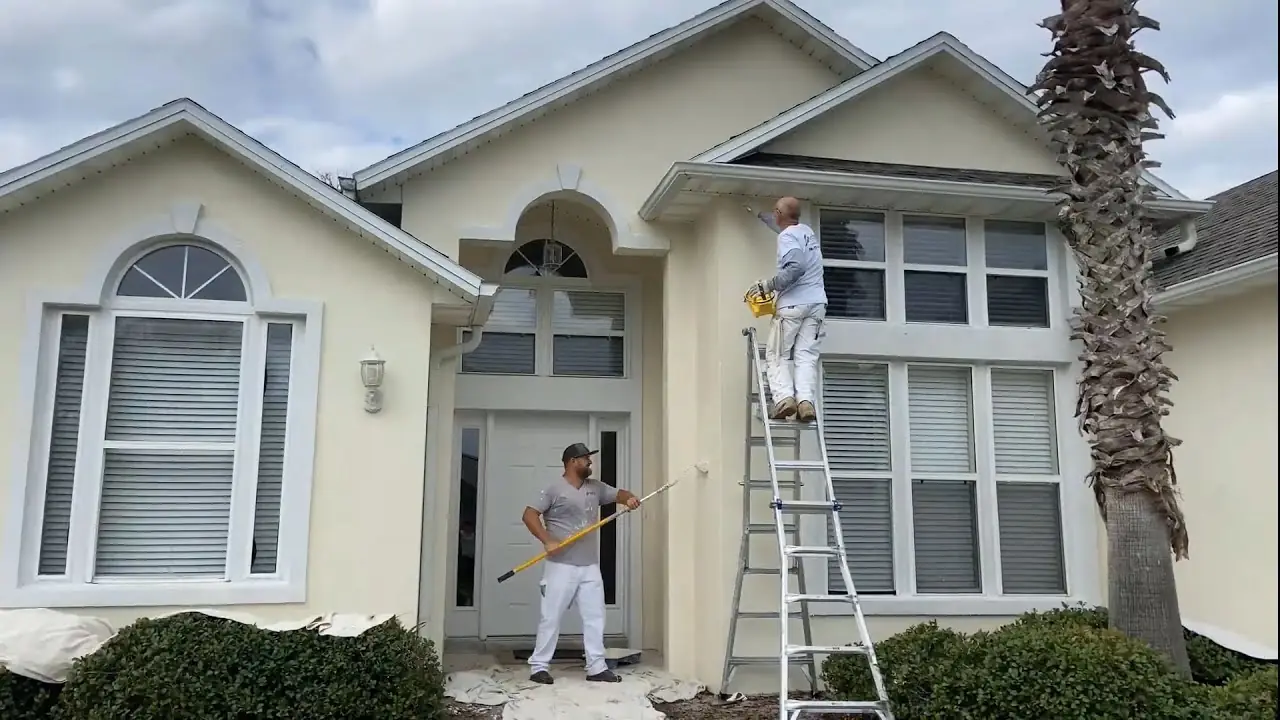
Every exterior paint can carries application conditions on the label, and at low elevation you can mostly ignore them between May and September. Up here you cannot. Boone sits above three thousand feet, and a good number of the homes we paint sit higher than that. The overnight temperature drop, the afternoon cloud that rolls in off the ridge, and the humidity that lingers on a shaded wall all narrow the window considerably.
The number most people know is the air temperature — usually around 50°F as a minimum. The number that actually matters is the surface temperature, and the two are not the same. A north-facing wall in October can be ten degrees colder than the air in front of it, and that wall is what the paint has to cure on. The reverse catches people out in summer: a south wall in direct afternoon sun can be far hotter than the air, hot enough that the coat skins over before it has flowed out, which leaves brush marks and poor adhesion.
The overnight low matters as much as the daytime high. Latex paint does not simply dry — it coalesces, the binder particles fusing together into a continuous film, and that process needs warmth and takes hours. A coat applied at four in the afternoon on a pleasant day that drops to 38°F by midnight has not finished forming a film, and it may never form a proper one. It looks fine for a season and then fails early, and nobody connects the failure back to the evening it went on.
Dew is the other thing that catches out crews who do not work at elevation. Clear mountain nights radiate heat away fast, and surfaces drop below the dew point well before dawn. Moisture settles on a coat that was not fully cured, and the result can be surfactant leaching — brown or tan streaks running down the fresh paint, usually on the shaded side. It can often be washed off, but it is a strong hint the coat went on too late in the day.
So a sensible exterior schedule up here looks like this: start once the walls have warmed and any dew has burned off, which is rarely before mid-morning; work the sunny elevations early and follow the shade around the house as the day goes; and stop with enough daylight left for the last coat to set before the temperature falls. In practice that is a shorter working day than most people expect, and we would rather tell you that honestly at estimate time than rush the last wall.
None of this replaces the prep. Washing the surface down, scraping back everything that has let go, priming bare wood the same day it is exposed so it does not weather overnight, and caulking the joints before the finish coat — that is still what determines how long the job lasts. The weather window just decides whether the coat you applied gets to do its job.
This is also why we will call and move a date. A rescheduled exterior is an inconvenience. An exterior painted into the wrong conditions is a repaint in three years.
Planning exterior work? Call (828) 963-0548 and we will walk the house and give you a free written estimate with a realistic schedule.